Bioinformatics · Data Science · Education · Academic Leadership & Entrepreneurship

Mohammad Asif Khan

Professor & Associate Dean, College of Computing & Information Technology, University of Doha for Science & Technology, Qatar
Editor-in-Chief, Encyclopaedia of Bioinformatics & Computational Biology (2nd ed., Elsevier, 2025)

A senior academic and research leader who has founded and led schools, centres, and ventures across six countries, at the intersection of bioinformatics, data science, and AI. Two decades of institution-building, ~USD 4.1M in competitive funding, and elected leadership of the global bioinformatics community.

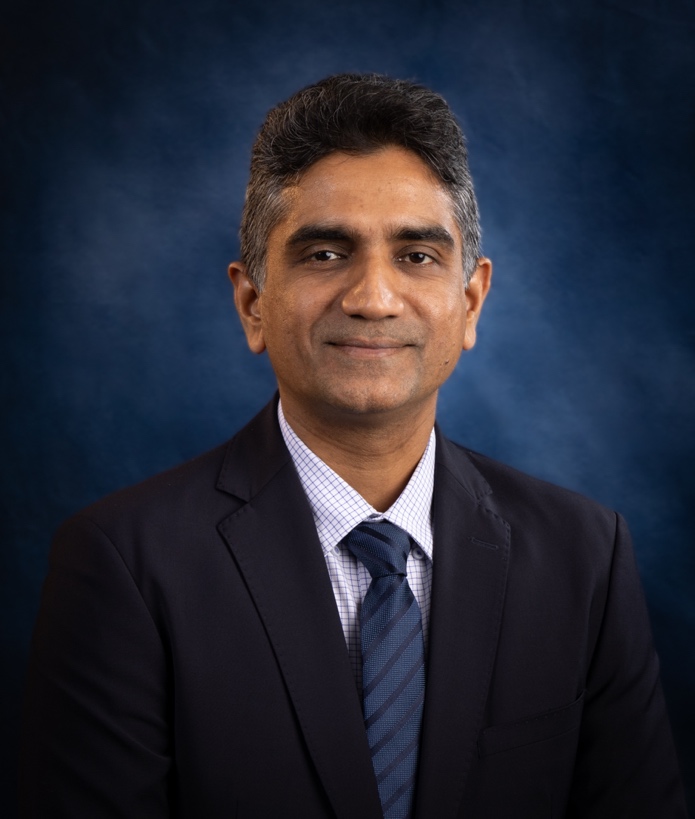
Portrait of Prof. Mohammad Asif Khan
3,630
Citations
+1,470 since 2021
29
H-index
i10 · 49
90+
Publications
peer-reviewed
$4.1M
Funding
$2.4M managed
16
Graduates
to completion
100+
Mentored
students & researchers
3
US Patents
granted
20+
Tools & DBs
developed
Profile

About

I am a bioinformatician and data scientist working at the interface of integrative biology and computation. Trained at the National University of Singapore (B.Appl.Sc., M.Sc., and Ph.D.), my research spans viruses, immune responses, vaccines, drug design, and disease biomarkers — connecting genotype to phenotype through biological data warehousing and applied bioinformatics. Across more than two decades and six countries, this work has produced over 90 peer-reviewed publications and three granted US patents, and attracted more than 3,600 citations.

My career has moved across six countries. After training and early research in Singapore — at the National University of Singapore and Johns Hopkins' Singapore division — I joined the faculty of Johns Hopkins University in the United States in 2010. In 2011, I was selected for the team that helped establish Perdana University in Malaysia, in collaboration with the Johns Hopkins University School of Medicine, where I joined as its sole bioinformatics faculty member and, building a team over the following years, became Founding Director of its Centre for Bioinformatics, Founding Dean of its School of Data Sciences — the first such school in Malaysia — and Founding CEO of the spin-off company Alterquo. From 2020 to 2023, while on secondment from Perdana University, I was a Professor at Bezmialem Vakıf University in Türkiye, on a TÜBİTAK International Fellowship for Outstanding Researchers, and co-founded the clinical-informatics start-up BioAct. Since February 2023, I have been Professor and Associate Dean at the College of Computing & Information Technology, University of Doha for Science & Technology (UDST), in Qatar, where I help steer academic strategy, accreditation, and interdisciplinary capstone work with industry, and helped establish its Centre of Excellence in Bioinformatics.

Teaching has run alongside all of this. I have taught genomics, immunology, bioinformatics, data science, and computing across four countries — to roughly 1,500 students at the National University of Singapore, medical and bioinformatics students at Perdana University in Malaysia, students in Türkiye, and, most recently, computing and IT students at UDST in Qatar. I have supervised 16 research students to graduation (12 MSc and 4 PhD) and currently advise three PhD candidates. I have led the development of several undergraduate and postgraduate programmes across Malaysia and Qatar, led their accreditation in Malaysia, and contributed to programme accreditation at UDST.

Much of my service has gone into building the regional bioinformatics community. Through the Asia-Pacific Bioinformatics Network (APBioNET) — the oldest regional affiliate of the International Society for Computational Biology (ISCB) — I helped drive much of its recent growth: expanding the InCoB conference series, launching the inaugural Asia & Pacific Bioinformatics Joint Congress (which united 15 regional organisations in 2024), and establishing new capacity-building programmes, a Student Council, an awards programme, a Bioinformatics Research Consortium, and a 2024 memorandum of understanding with ISCB. I serve as its Vice President (Operations) and Immediate Past President. I am also Chairperson of the Global Organisation for Bioinformatics Learning, Education and Training (GOBLET), and I led the Bioinformatics Grand Challenges Consortium (BGCC) in defining seven systemic challenges in bioinformatics training. In 2025, I served as one of the Editors-in-Chief of the second edition of the Encyclopaedia of Bioinformatics and Computational Biology (Elsevier). Beyond these roles, I run 10 data-science interest groups that connect close to 1,000 practitioners across the region.
Education
2006–2010
PhD, Bioinformatics — National University of Singapore.
2003–2005
MSc, Bioinformatics — National University of Singapore.
1999–2003
B.Appl.Sc. (Hons.), Biotechnology, with a minor in Scientific Computation & Multimedia Communication — National University of Singapore.
NationalitySingaporean
LanguagesEnglish, Malay & Urdu (spoken & written) · Hindi (spoken) · Arabic (read & written)
Research

Areas of focus

Six connected threads, spanning core research, tools and databases, synthesis, and training.

Pathogen Informatics

Mapping the human–pathogen interactome — the DNA, RNA, and protein sets involved in infection — to expose pathogenesis and pinpoint intervention targets.

Vaccine Informatics

Designing vaccines that withstand the antigenic diversity and high mutation rates of pathogens such as influenza A and HIV-1, through diversity-aware, computational target discovery.

Immuno-Informatics

Predicting epitopes and HLA-restricted targets — modelling how antigenic peptides trigger immune responses — to guide rational immunogen design.

Biomarker & Microbiome Informatics

Linking molecular and microbial signatures to disease with machine learning — classifying patient gene-expression data, and applying metagenomic and microbiome analysis to the gut microbiome in cancer and neurological disease, to support diagnosis and prognosis.

Biological Platform Development

Building knowledge-discovery tools and specialised databases that make biological diversity tractable. DiMA — a published tool for sequence-diversity analysis — is a concrete step toward ViVA, an envisioned Viral Immuno-Variome Analyzer integrating diversity with immune and clinical data.

Education, Reviews & Field-Building

Synthesising the field through reviews, encyclopaedic references, and training — from whole-exome-sequencing and big-data reviews to co-editing the Encyclopaedia of Bioinformatics and helping define the field's grand challenges.

Impact

Output & influence over time

Two decades of output and citation, drawn from Google Scholar.

Research output

Peer-reviewed publications per year
Journal articles, conference papers, book chapters & books · 2002–2025

Scholarly impact

Citations received per year (Google Scholar)
Google Scholar counts · 2004–present · current year is partial
Network

Collaboration & reach

Two decades of co-authorship, and a career spanning six countries — drag to explore; click a collaborator to open their profile.

Co-authorship

Top 20 collaborators (of 167 co-authors on Google Scholar), each with 4+ shared peer-reviewed papers; node size scales with shared papers, and lines link co-authors who also published together.
ORCIDScholar profileNo public profile

Career journey

Seven posts across six countries — the path from Singapore to Doha, earliest to latest. Hover a stop for details.
Leadership

Institution building

A record of founding and leading academic entities — centres, schools, and companies — across Singapore, the USA, Malaysia, Türkiye, and Qatar. Backed by ~USD 4.1M in competitive funding, leadership across the development of eight academic programmes, and multiple accreditations.

1999–2010
Foundations: doctoral training & early research
National University of Singapore (BSc, MSc, PhD) & Johns Hopkins, Singapore
2010–2011
Faculty & Research Associate
Johns Hopkins University, USA
2011
Pioneer team member, JHU–Perdana partnership
Perdana University, Malaysia — mandate to build data science & bioinformatics capacity
2014
Founding Director, Centre for Bioinformatics (PU-CBi)
Perdana University, Malaysia
2016–2019
Founding Dean, School of Data Sciences — the first in Malaysia
Perdana University · Senate Member · later Chief Data Officer
2018
Founder & CEO, Alterquo
University spin-off in high-dimensional data services · Malaysia
2020–2023
Professor (secondee) & TÜBİTAK International Fellow
Bezmialem Vakıf University (BILSAB), Istanbul, Türkiye
2020–2023
Co-Founder, BioAct
Clinical-informatics start-up · Türkiye
2023–Present
Professor & Associate Dean, College of Computing & IT
University of Doha for Science & Technology, Qatar · chairs the QS/THE ranking working group; vice-chairs accreditation & curriculum
2024
Founding Convenor, Centre of Excellence in Bioinformatics
University of Doha for Science & Technology, Qatar
Publications

Selected works

A selection of most-cited contributions across databases, viral diversity, vaccines, biomarkers, and field-defining reviews. Full list on Google Scholar.

453cites
Molecular evolution and phylogeny of elapid snake venom three-finger toxins
Journal of Molecular Evolution · 2003
Venom & Toxin · Zuckerkandl Prize
291cites
Advancing personalized medicine through application of whole exome sequencing and big data analytics
Frontiers in Genetics · 2019
Reviews & Synthesis
254cites
ANTIMIC: a database of antimicrobial sequences
Nucleic Acids Research · 2004
Databases & Tools
246cites
Evolutionarily conserved protein sequences of influenza A viruses
PLOS ONE · 2007
Pathogen & Viral Diversity
236cites
Cytokine expression profile of dengue patients at different phases of illness
PLOS ONE · 2012
Dengue & Biomarkers
216cites
Encyclopedia of Bioinformatics and Computational Biology
Elsevier · 2018 (Section Editor) · 2nd ed. 2025 (Editor-in-Chief)
Reference Work
191cites
MULTIPRED: prediction of promiscuous HLA binding peptides
Nucleic Acids Research · 2005
Immuno-Informatics
132cites
Conservation and variability of dengue virus proteins
PLOS Neglected Tropical Diseases · 2008
Pathogen & Viral Diversity
View full list on Google Scholar
Tools & Databases

What I've helped build

A selection from 20+ bioinformatics tools and databases I have developed or contributed to since 2003 — spanning viral diversity, immunoinformatics, and specialised biological databases. Each links to its peer-reviewed paper, its live tool, or both.

2024tool
DiMA — Diversity Motif Analyser
Command-line analysis of protein and nucleotide sequence diversity and its motifs.
Viral Diversity · FlagshipLive tool ↗Paper ↗
2022R pkg
vDiveR
Visualization of viral protein sequence diversity dynamics; companion to DiMA.
Viral DiversityLive on CRAN ↗
2022tool
UNIQmin
Alignment-free determination of the minimal sequence set capturing a viral peptidome's diversity.
Viral DiversityLive on PyPI ↗Paper ↗
2014database
STATdb
Specialised resource for the STATome — the STAT-family signalling proteins.
DatabasesPaper ↗
2013tool
AVANA — Antigen Variability ANAlyzer
Genome-scale analysis of antigenic sequence diversity for vaccine target discovery.
Vaccine InformaticsLive on SourceForge ↗
2010database
T3SEdb
Data warehouse of bacterial Type III Secretion System effector proteins.
Pathogen InformaticsPaper ↗
2005system
MULTIPRED
Computational prediction of promiscuous HLA class I and class II binding peptides.
Immuno-Informatics · ~190 citationsPaper ↗
2004database
ANTIMIC
Curated database of antimicrobial peptide sequences.
Databases · ~250 citationsPaper ↗
Speaking

Keynotes & invited talks

Selected from 70+ invited talks, keynotes and plenaries delivered across more than a dozen countries since 2003.

2026
Invited speaker — Center for Clinical Precision Medicine & Genomics, Hamad Medical Corporation, Qatar.
2025
Invited speaker — Precision Medicine & the Future of Genomics (PMFG) Summit, Doha, Qatar.
2024
Keynote — 17th International Symposium on Health Informatics & Bioinformatics (HIBIT 2024), Istanbul, Türkiye.
2024
Keynote — 8th International Symposium on Bioinformatics (InSyB 2024), New Delhi, India.
2023
Keynote, Education Track — ISCB/ECCB 2023 (International Society for Computational Biology / European Conference on Computational Biology), Lyon, France.
2022
Plenary — “Harnessing the Power of Genomics & Immunoinformatics in Vaccine Design,” International Conference on Translational Omics & Bioinformatics.
Service & Editorial

Roles in the community

Elected governance, board, and editorial leadership across the international bioinformatics community — from ISCB, APBioNET, and GOBLET to Editor-in-Chief of a major Elsevier reference work.

Encyclopaedia of Bioinformatics & Computational Biology
Editor-in-Chief (2nd ed.); Section Editor, Applications Volume (1st ed.) — Elsevier
2018 · 2025
Asia-Pacific Bioinformatics Network (APBioNET)
Vice President (Operations); Immediate Past President; long-standing Executive Committee member
2018–Present
International Society for Computational Biology (ISCB)
Honorary Director — the global society of the computational biology community
2025–Present
GOBLET — Global Organisation for Bioinformatics Learning, Education & Training
Chairperson; elected Executive Board member
Present
Frontiers
Associate Editor, Computational Genomics (Frontiers in Genetics; Bioengineering & Biotechnology); Topic Editor across several Research Topics
Present
Bioinformatics Grand Challenges Consortium (BGCC)
Founder & Lead — global initiative defining and addressing the field's grand challenges
Present
Association for Medical and Bio-Informatics, Singapore (AMBIS)
Vice President; Immediate Past President
Present
External Thesis Examiner
16 PhD & MSc thesis examinations across ten universities in five countries
2016–Present
Journal & Conference Service
Reviewer for numerous journals, conferences and funding agencies; organiser of 80+ international bioinformatics conferences, workshops and meetings
2003–Present
Recognition

Selected awards & honours

2020–2023
International Fellowship for Outstanding Researchers — TÜBİTAK (Scientific & Technological Research Council of Türkiye).
2017
Best Paper Awards (Gold ×2) — BMC Medical Genomics & BMC Genomics, 16th International Conference on Bioinformatics (InCoB).
2011
Young Researcher Fellowship — Immunology Frontier Research Center (IFReC), Osaka University, Japan.
2010
Finalist, Chua Toh Hua Gold Medal — for the most outstanding thesis, Yong Loo Lin School of Medicine, NUS.
2003
Zuckerkandl PrizeJournal of Molecular Evolution, for outstanding contribution.
2003–24
Multiple APBioNET Meritorious Service Awards and best-poster honours across international conferences.

Let's connect

I welcome conversations around research collaboration, advisory and editorial roles, doctoral supervision, and invitations to speak. If our interests overlap, I'd be glad to hear from you.

Or write to me directly at my email